
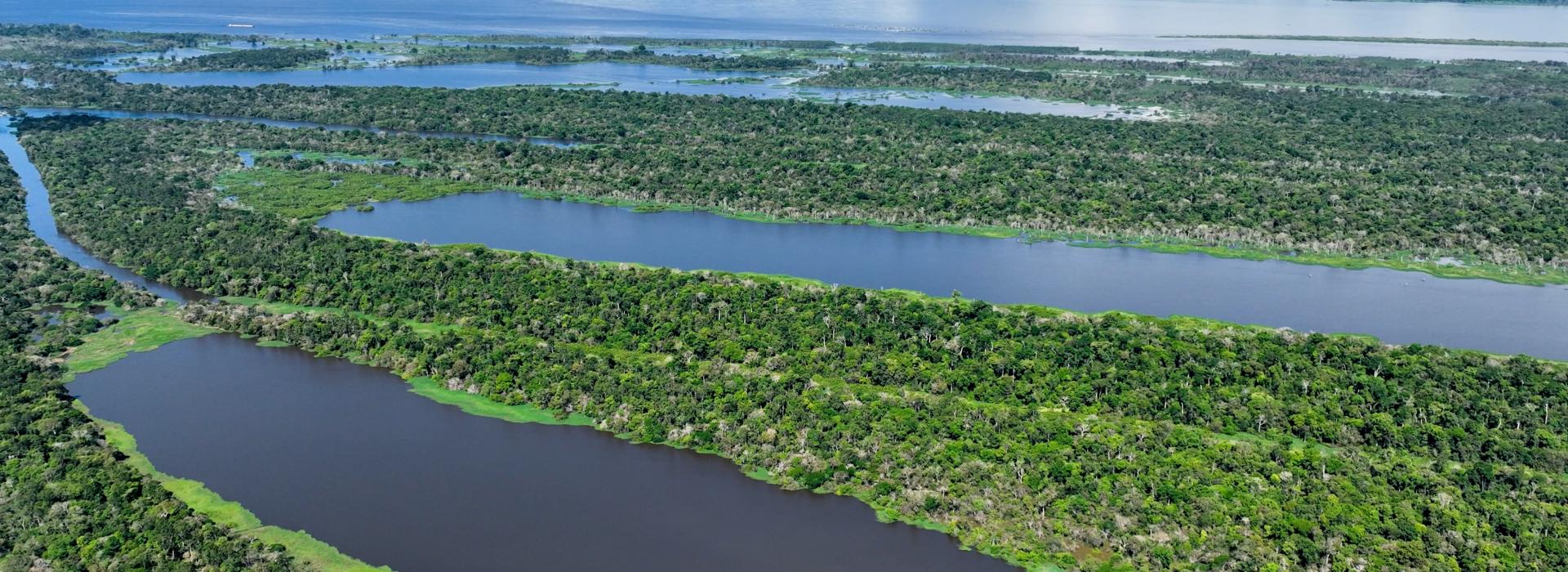
A Major Climate Opportunity Remains Under-allocated
A Major Climate Opportunity Remains Under-allocated
Why Africa and Latin America will be central to the next phase of climate finance
One message came through clearly at London Climate Action Week 2026: the global climate transition cannot succeed without emerging markets. The conversation has moved beyond whether capital is interested in climate investment. The more important question now is how governments, investors, insurers, banks and development institutions can create the conditions for capital to reach the real economy in ways that are resilient, commercially credible and capable of scale.
That question matters because many of the regions most central to future climate outcomes remain materially under-allocated by institutional capital. Africa and Latin America sit at the heart of this imbalance. They bring together some of the world’s most important natural capital, renewable energy resources, biodiversity hotspots, agricultural systems, and infrastructure needs. Yet the gap between climate ambition and available finance remains significant. [iea.org], [climatepol...iative.org]
For pension funds, insurers and banks, this is not only a development challenge. It is an allocation question. Where will the next phase of climate finance be built? And how can institutional capital access it in ways that are structured, disciplined and aligned with long-term risk and return objectives?
Africa: where resilience, energy access and growth converge
Africa illustrates both the scale of the opportunity and the urgency of the financing gap. According to the IEA’s World Energy Investment 2025 analysis for Africa, around 600 million people on the continent still lack access to electricity, while more than 1 billion people lack access to clean cooking. These figures underline the scale of unmet demand for modern, reliable and cleaner energy systems across the continent. [iea.org]
At the same time, Africa’s climate finance flows remain well below what is required. Climate Policy Initiative’s Landscape of Climate Finance in Africa 2024 found that climate finance flows to Africa increased by 48%, from US$29.5 billion in 2019/20 to US$43.7 billion in 2021/22. Annual climate investment crossed the US$50 billion mark for the first time in 2022. [climatepol...iative.org]
The direction of travel is encouraging. But the scale remains insufficient. The same report found that only 23% of Africa’s estimated climate finance needs are currently being met, with just 18% of annual mitigation needs and 20% of adaptation needs covered in 2021/22. [climatepol...iative.org]
This matters because Africa’s climate finance challenge is not only about emissions reduction. It is about resilience, food systems, water security, energy access, infrastructure, livelihoods and economic development. It is also about ensuring that climate finance reaches the markets and communities where adaptation needs are most acute.
The structure of that finance is equally important. Climate Policy Initiative found that 87% of Africa’s tracked climate finance came from international sources, highlighting the need to strengthen domestic capital mobilisation alongside international investment flows. It also noted that Africa has around US$2.4 trillion of bank, insurance and pension assets under management, suggesting that local financial systems could play a larger role in building climate finance markets over time. [climatepol...iative.org]
This is where the discussion becomes particularly relevant for institutional investors. Africa does not lack need, nor does it lack opportunity. The central issue is how to convert that opportunity into investable pipelines with appropriate risk-sharing, local partnerships, capacity building, and long-term capital structures.
Latin America: transition assets with global relevance
Latin America and the Caribbean offer a different, but equally important, climate finance story. The region already has a relatively clean power base compared with many other parts of the world. The IEA’s World Energy Investment 2025 analysis for Latin America and the Caribbean reports that clean energy investment in the region has grown by nearly 25% over the past decade, reaching US$70 billion in 2025. [iea.org]
The same analysis notes that Chile, Colombia and Costa Rica saw renewable investment double, while Brazil contributed to momentum through an enabling environment for small-scale solar photovoltaic investment and bioenergy, supported by the enactment of the Future Fuel Law in 2024. [iea.org]
Yet the region still accounts for only 5% of privately financed global investment in clean energy, despite rising renewable investment and significant transition potential. The IEA identifies high interest rates, a lack of long-term finance and rising public debt-servicing costs as factors weighing on investment. [iea.org]
That gap matters because Latin America is not only climate-vulnerable. It is central to several of the transition themes that will shape global capital allocation over the coming decade: renewable energy, sustainable agriculture, biodiversity, water, critical minerals, green bonds and nature-based solutions.
The region’s role in critical minerals is already material. The IEA reports that Latin America has received US$45 billion in upfront investment in greenfield mining for copper and lithium since 2015, with Chile, Brazil, Argentina, Peru, Panama and Ecuador identified as main recipients. [iea.org]
This creates a broader investment story than climate mitigation alone. Latin America’s transition is linked to energy security, industrial competitiveness, sustainable land use, natural capital and the infrastructure required to support more resilient economies.
The investability gap
Across both Africa and Latin America, the issue is increasingly less about whether climate opportunities exist. They clearly do. The more important question is whether those opportunities are sufficiently prepared, structured and risk-adjusted for institutional capital.
This was one of the strongest takeaways from the London Climate Action Week discussions: capital is increasingly interested in climate solutions, but the constraint is often the availability of investable, scalable and resilient opportunities. Pipeline creation, capacity building, insurance and risk mitigation, domestic capital mobilization, transition planning and public-private partnership models are all becoming central to the next phase of climate finance. That distinction matters.
If the challenge were simply a shortage of capital, the answer would be fundraising. But if the challenge is investability, the solution becomes more strategic. It requires local origination, stronger financial intermediaries, better data, credible impact measurement, risk-sharing mechanisms, insurance solutions, guarantees, blended finance structures and careful consideration of local currency exposure.
That is why insurance and risk allocation featured so prominently in the London Climate Action Week discussions. Insurance was repeatedly discussed as a way to reduce specific investment risks, support blended finance structures, improve bankability and make opportunities more accessible to institutional investors.
Risk needs to be structured, not avoided
For institutional investors, the emerging-markets conversation can no longer rely on broad assumptions. Africa and Latin America are not single investment stories. They are diverse regions with different policy frameworks, financial systems, transition pathways and sector opportunities. Treating them as one homogeneous risk category risks missing the nuance that investors increasingly need.
At the same time, climate risk is not confined to emerging markets. The heatwave that shaped London Climate Action Week 2026 was a reminder that physical climate risk is already affecting developed markets too. The week’s extreme heat became a live example of why resilience matters for businesses, infrastructure, schools, cities and households.
This matters for portfolio construction. If climate risk is global, then capital allocation should not be constrained by outdated assumptions about where risk sits. The more relevant question is where risk is properly understood, priced and structured.
The next phase of climate finance will be built in real economies
The green economy is already large and growing. According to the LSEG Investing in the Green Economy 2026 report, the global green economy now exceeds US$10 trillion in market capitalisation, accounts for approximately 9.9% of global listed equities, and recorded 5.3% green revenue growth in 2025 across more than 21,000 listed companies. [news.un.org]
But the next phase of climate finance will not be defined only by listed equities or developed-market transition stories. It will be shaped by whether capital can reach the real economy: financial institutions, infrastructure, agriculture, energy systems, biodiversity-linked value chains and local capital markets in Africa and Latin America.
For pension funds, insurers and banks, this creates a strategic opening. These regions offer exposure to themes that are increasingly central to long-term portfolio thinking: resilience, diversification, transition finance, food and water security, renewable energy, sustainable agriculture, biodiversity and domestic market development.
The opportunity is not without complexity. But complexity is not the same as impossibility. The task now is to move from recognizing the importance of emerging markets to building the structures that make climate investment in these regions scalable, disciplined, and investable.
The future of climate finance will not be determined only in the markets where capital is raised. It will be determined in the markets where resilience, transition and growth must be financed. Increasingly, that points to Africa and Latin America.
Learn more about our work in emerging markets. Contact us!
About the author:
Melanie Aimer is the Chief Commercial Officer at Finance in Motion and has over 20 years of experience leading global teams across Corporate & Investment Banking, Asset Management, Private Banking and Wealth Management.
Read more on our Thought Leadership