
Brazil and the New Geography of Influence
Brazil and the New Geography of Influence
From recipient markets to strategic partners
The world’s most important investment story is no longer unfolding at the edges of the global economy. It is taking shape in emerging markets, where climate pressure, energy demand, food security, and demographic growth are forcing a new kind of growth model into view.
For decades, international cooperation rested on a comfortable assumption: capital, expertise, and solutions flowed from developed markets to emerging economies. Emerging markets were viewed primarily as destinations for investment rather than partners in defining priorities. That assumption is increasingly out of date.
Emerging and developing economies are expected to deliver around 60% of global growth over the next five years (IMF), are home to approximately 85% of the world’s population (World Bank) and will drive more than 80% of future growth in global energy demand (IEA). The markets that will decide whether the world meets its climate, growth, and security ambitions are becoming the center of gravity.
Brazil a signal of a wider shift
Brazil is a useful starting point. Too often reduced to commodities and the Amazon, the country increasingly demonstrates that emerging markets are not merely adapting to the sustainability agenda. They are helping define it.
Its relevance has sharpened because the global investment backdrop has changed. Supply chains are being reconfigured, and institutional investors are looking for resilience beyond traditional markets. Food, fuel, and energy security have moved from sector concerns to strategic priorities.
Brazil sits at the center of that shift. It combines scale in vital commodities with a largely renewable power base, hard-currency-linked export sectors, and a financial system able to absorb institutional capital. It is also one of the few large emerging markets connected to multiple global power centers. For institutional investors, that gives Brazil a counter-cyclical role at a time of supply-chain and geopolitical realignment.
Its ecological transformation agenda adds another dimension. It creates a large, underfinanced opportunity just as institutional investors are reassessing diversification, resilience, and long-term exposure to emerging markets.
Those advantages are visible in the areas now most central to global investment: energy, nature, and climate resilience. Brazil generates approximately 89% of its electricity from low-carbon sources, with wind and solar now accounting for more than 27% of generation and renewables nearly half of total energy supply (Ember; IEA). It also holds roughly 20% of the world’s biodiversity, is home to approximately 60% of the Amazon rainforest, and attracted an estimated USD 37 billion in clean-energy investment in 2024 (CBD; WWF; BloombergNEF). These are not isolated credentials. They place Brazil at the intersection of energy security, natural capital, and climate resilience.
The same applies to food systems and industrial policy. Brazil is a major supplier of soybeans, coffee, sugar, and orange juice, while its broader food and land-use economy accounted for an estimated 23.2% of GDP and almost half of exports in 2024 (USDA; CEPEA; GOV). Through its Ecological Transformation Plan and ABC+ low-carbon production plan, the country is seeking to link productivity, infrastructure, renewable energy, nature conservation, and lower-carbon agriculture within a single growth agenda (MOF; ABC+). The investment question is therefore not whether Brazil matters, but how quickly capital can move toward the parts of its economy where competitiveness and sustainability are beginning to reinforce each other.
Brazil is not an isolated case. Across emerging markets, sustainability is moving beyond a moral argument or development objective and becoming a source of competitiveness. As these markets generate more growth and more solutions, they are forcing a rethink of how capital is raised, shared, and governed.
Capital mobilization is entering a new phase
The architecture of sustainable investment is therefore entering a new phase. Donor funding, development finance institutions, and private institutional investors still matter, but their roles are evolving. What comes next will require more integrated capital structures and a clearer recognition that emerging markets are not passive destinations for money. They are increasingly where investable solutions are being built.
For institutional investors, including insurers, pension funds, sovereign wealth funds, banks, and family offices, the requirements are clear: scale, competitive risk-adjusted returns, predictable cashflow, liquidity, and structures that help manage the volatility of FX exposure. Development finance institutions need their balance sheets to work harder. Donors must show that limited public funding can unlock more private capital. That is why capital-market solutions, securitization, hedging structures, and risk-sharing mechanisms are becoming central to the sustainable investment agenda.
Partnership, not one-way transfer
Yet the technical language should not obscure the politics beneath it. The question is not only who provides capital, but who defines the opportunity, sets priorities, shares risk, and writes the rules of the post-2030 agenda. These are questions of influence.
That rebalancing is overdue. Climate change, sustainable growth, and economic resilience cannot be addressed through one-way relationships dressed up as partnership. They require countries that increasingly share the risks to also share the authority to shape the solutions.
The debate is no longer whether emerging markets deserve a seat at the table. The table itself is being rebuilt. Countries once treated mainly as recipients of global solutions are becoming architects of them. For institutional investors, emerging markets are not only places to deploy capital. They are where new models of growth, resilience, and innovation are being created. Those who still see them as peripheral risk missing where the future is already taking shape. Brazil has already taken its seat.
About the author:
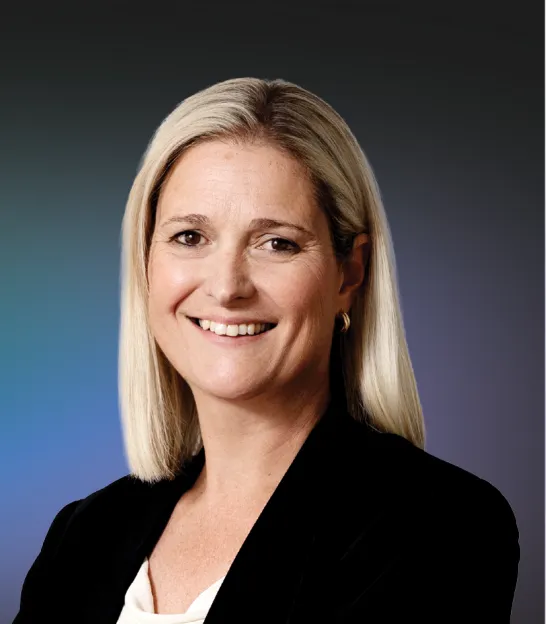
Sylvia Wisniwski is the CEO of Finance in Motion and has more than three decades of experience in impact investing.